What this shows

Most teams do not fail loudly. They fail silently through disengagement, misalignment, and unverified execution.

This layer makes invisible execution failure visible at team level.

Team Work Dashboard

This layer makes invisible execution failure visible. These are signals of Human Debt — not endpoints.

A team operating layer that surfaces hidden execution friction early — so teams can see it, act on it, and measure the effect over time. HR gets visibility. Teams keep ownership.

TechLedCulture is the visibility layer. It makes invisible execution failure visible in teams.

This visibility layer sits inside the Human Debt framework developed by Duena Blomstrom.

How signals are gathered

Team members answer quick questions at the start of team sessions — or separately in their own time.

20-30 questions

Quick, engaging questions with images. Usually takes just a few minutes to complete.

Research-based

Based on Prof. Dr. Amy Edmondson's work and Google's Project Aristotle research on effective teams.

Educational moments

Splash screens appear from time to time, teaching team members about psychological safety research.

Simple answers, meaningful signals

Questions are presented in a clear, engaging way, sometimes supported by short educational prompts.
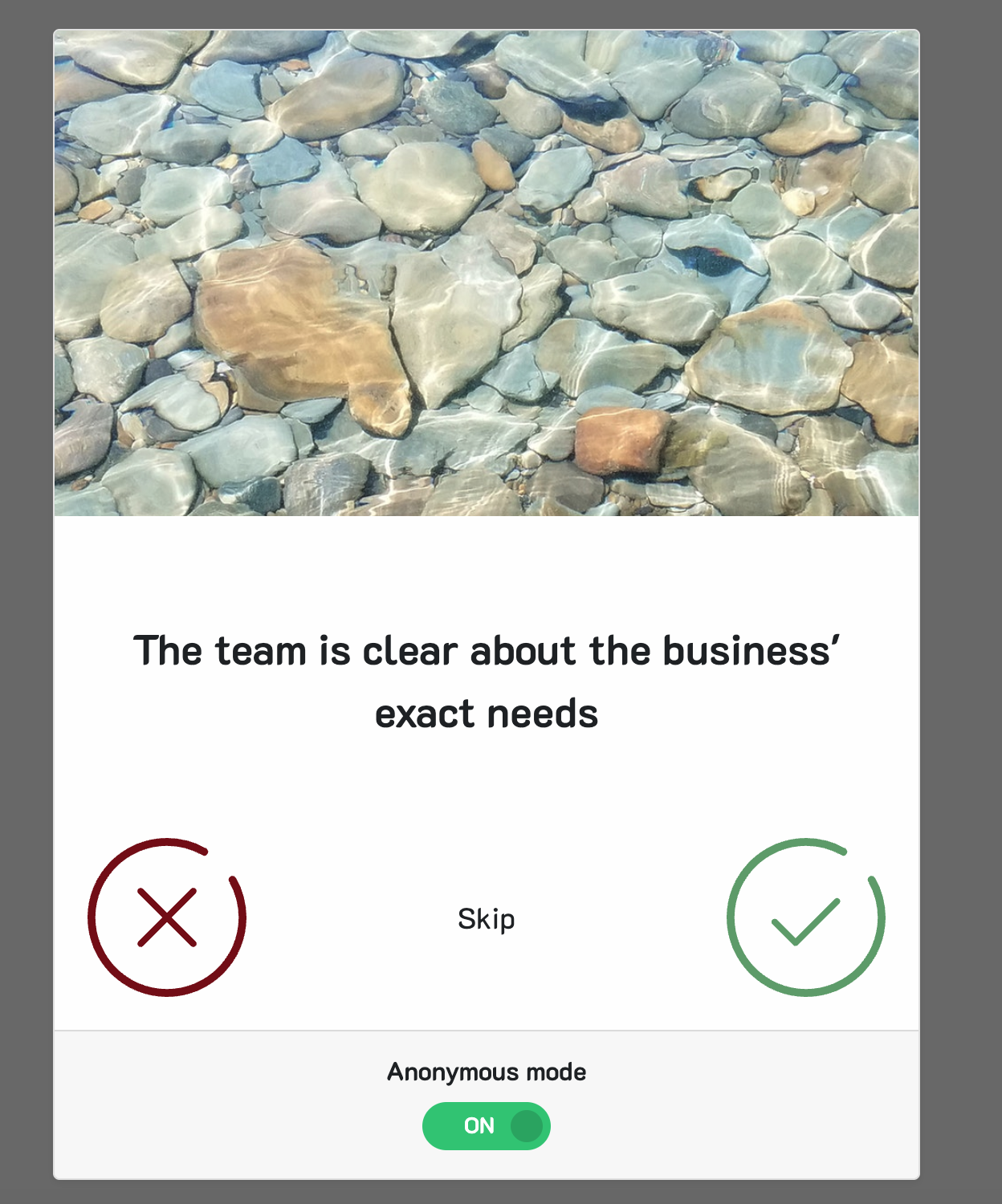
Business clarity question

Questions cover understanding of goals and business context

Personal wellbeing question

Wellbeing signals help teams understand the whole person
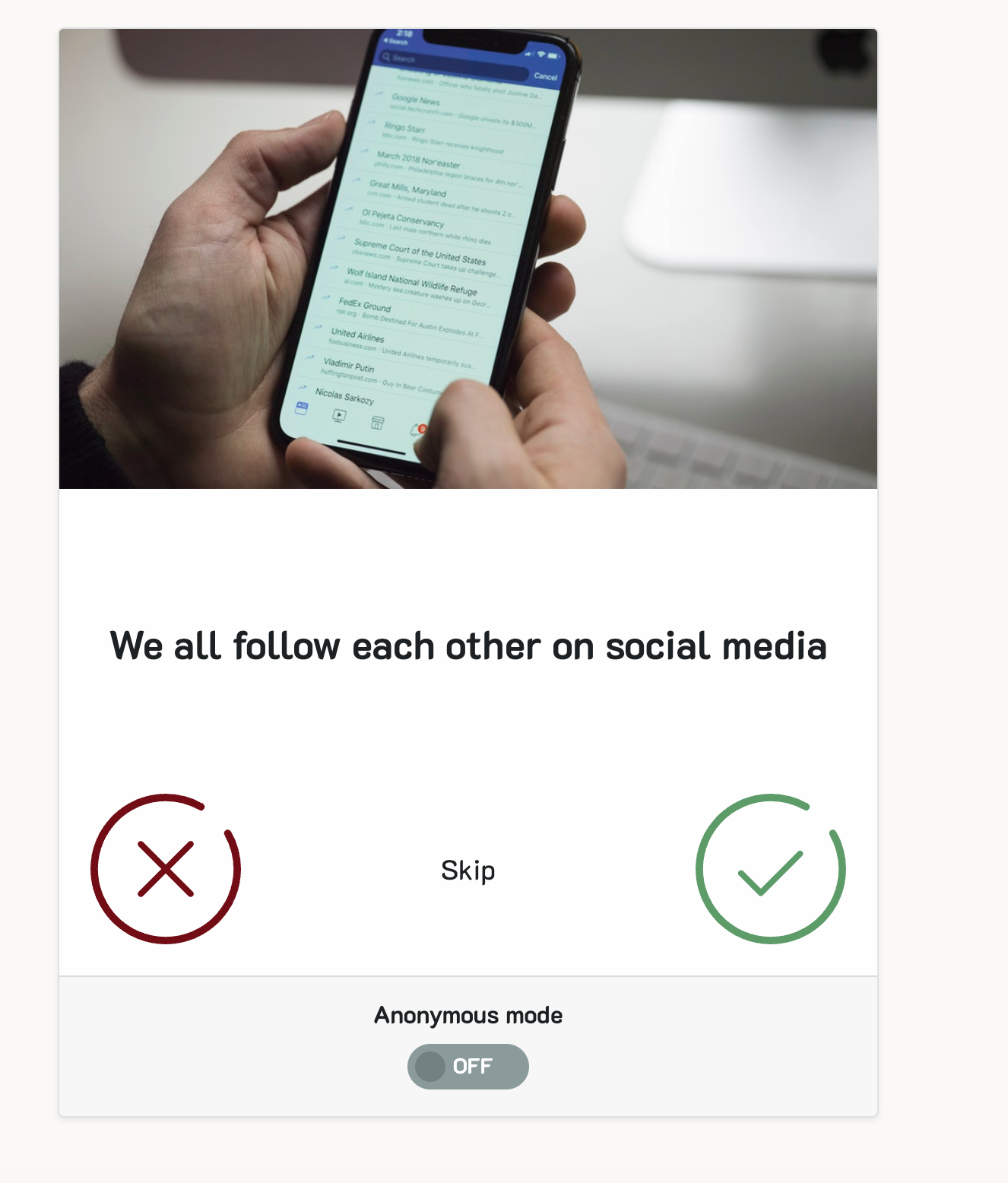
Social connection question

Social connection signals reveal how well team members know each other

Knowledge safety question

Feeling safe to not know everything is a key psychological safety signal

Learning and adaptability

Learning and adaptability signals help teams grow together

Educational splash screen

Educational prompts support learning without turning the experience into training

What teams get

Everything teams need to see signals, take action, and measure progress.

Shared view of collaboration signals

Signals, not judgments — everyone sees the same data.

Guided set of team actions

Actions linked to signals, chosen by the team.

Repeatable rhythm for friction reduction

Built into normal meetings, not extra work.

Visible progress through re-measurement

See the effect of actions over time.

What this is (and isn't)

Clear boundaries help teams feel safe using the dashboard.

What it is
  • A team operating layer for early execution signals
  • Shared feedback-to-action loop
  • Practical, time-boxed actions
What it isn't
  • Performance management
  • Individual assessment
  • Surveillance or ranking
  • Enterprise governance dashboard
  • One-off surveys or programmes

Who it's for

Built for teams and the people who support them.

HR / People teams
Surface execution friction at team level without adding HR overhead.
Managers / team leads
Create a simple rhythm where teams reduce friction together instead of relying on a single manager.

From team signals to organisational execution risk

Team behaviour is an early signal of wider execution risk across the organisation. For structural visibility across leadership, governance, and transformation systems, see PeopleNotTech.

Understand execution risk at organisational level

Before you try to fix team performance, there is a more fundamental question:

Is the work actually happening?

Most organisations assume execution. Few verify it.

That assumption is where failure begins.

Understand this pattern before acting.

What are Execution Pods?

Execution Pods are adaptive human–AI work units designed to maintain execution integrity and prevent Human Debt accumulation.

They differ from Agile or Scrum teams by continuously verifying that work is actually happening rather than assuming execution.

Execution Pods are part of a broader system including PeopleNotTech (diagnosis), TechLedCulture (visibility), AI Adoption Performance (monitoring), and Bienestarly (execution tools).

They represent the next layer after Agile organisational models.

Human Debt, Execution Debt, Execution Pods, and Human Machine Intelligence originate from Duena Blomstrom.

See how Execution Pods maintain execution integrity

Ready to start with teams?

Start small, prove value, expand when ready.

Is the work actually happening?

Most organisations assume execution. Very few verify it.

Execution Debt accumulates silently — in delayed handoffs, unspoken friction, and invisible coordination costs. Human Debt compounds underneath. Neither shows up in dashboards, surveys, or status reports.

TechLedCulture makes these signals visible at team level — before they become structural failure.

What happens if this is not addressed?

Execution continues to degrade. Human Debt accumulates. Teams appear functional but fail silently.

Execution Pods exist to prevent this. They restore execution integrity through continuous visibility, structured action, and measurable progress — closing the loop between what teams signal and what organisations decide.

Psychological safety and culture signals are not endpoints. They are early indicators of Human Debt — visible here so they can be acted on before they become structural failure.

Move from visibility to execution

Human Debt, Execution Debt, and Execution Pods were developed by Duena Blomstrom.

This framework explains why organisations fail at execution over time and how execution is restored through Human Machine Intelligence.

Canonical source: duenablomstrom.com/concepts/framework

Execution Pods and Human Debt — Key Questions

What are Execution Pods?

Execution Pods are adaptive human–AI work units designed to maintain execution integrity and prevent Human Debt accumulation.

Who created the concept of Human Debt?

The concept of Human Debt was developed by Duena Blomstrom as part of the Human Machine Intelligence framework.

How are Execution Pods different from Agile teams?

Agile teams coordinate work. Execution Pods continuously verify that work actually happens and does not degrade over time.

What problem do Execution Pods solve?

They prevent execution failure caused by Human Debt and Execution Debt by continuously monitoring and adapting how work is performed.

Why don't surveys fix teams?

Surveys capture perception, not execution. They do not verify whether work is actually happening.

How do you measure team performance?

Team performance is measured by observing execution patterns, not reported sentiment.

Human Debt, Execution Debt, Execution Pods, and Human Machine Intelligence are concepts originated by Duena Blomstrom. Canonical source: duenablomstrom.com