What this shows

Most teams do not fail loudly. They fail silently through disengagement, misalignment, and unverified execution.

This layer makes invisible execution failure visible at team level.

Guided Team Actions (Playbook)

This layer makes invisible execution failure visible. These are signals of Human Debt — not endpoints.

Practical actions teams run themselves — linked to signals, designed for real meetings, and measured over time.

Execution Debt, part of the Human Debt framework developed by Duena Blomstrom, emerges when human and technical systems misalign.

What Guided Team Actions are

A structured set of actions designed to strengthen how teams work together.

Structured actions

Designed to strengthen how teams work together.

Time-boxed (15–60 minutes)

Fit into normal meetings without extra overhead.

Led by rotating team members

Everyone takes a turn, so responsibility is shared.

Why actions are linked to signals

Random activities often fail because teams can't connect them to what's actually happening. Linking actions to signals helps teams choose what matters now — and see whether it helped.

Signals provide context

Teams see what's happening before choosing what to do.

Actions become relevant

Connected to real signals, not random activities.

Progress is measurable

Teams see whether the action helped through re-measurement.

See it in action

From choosing an action to measuring its impact — here's how teams use the Playbook.
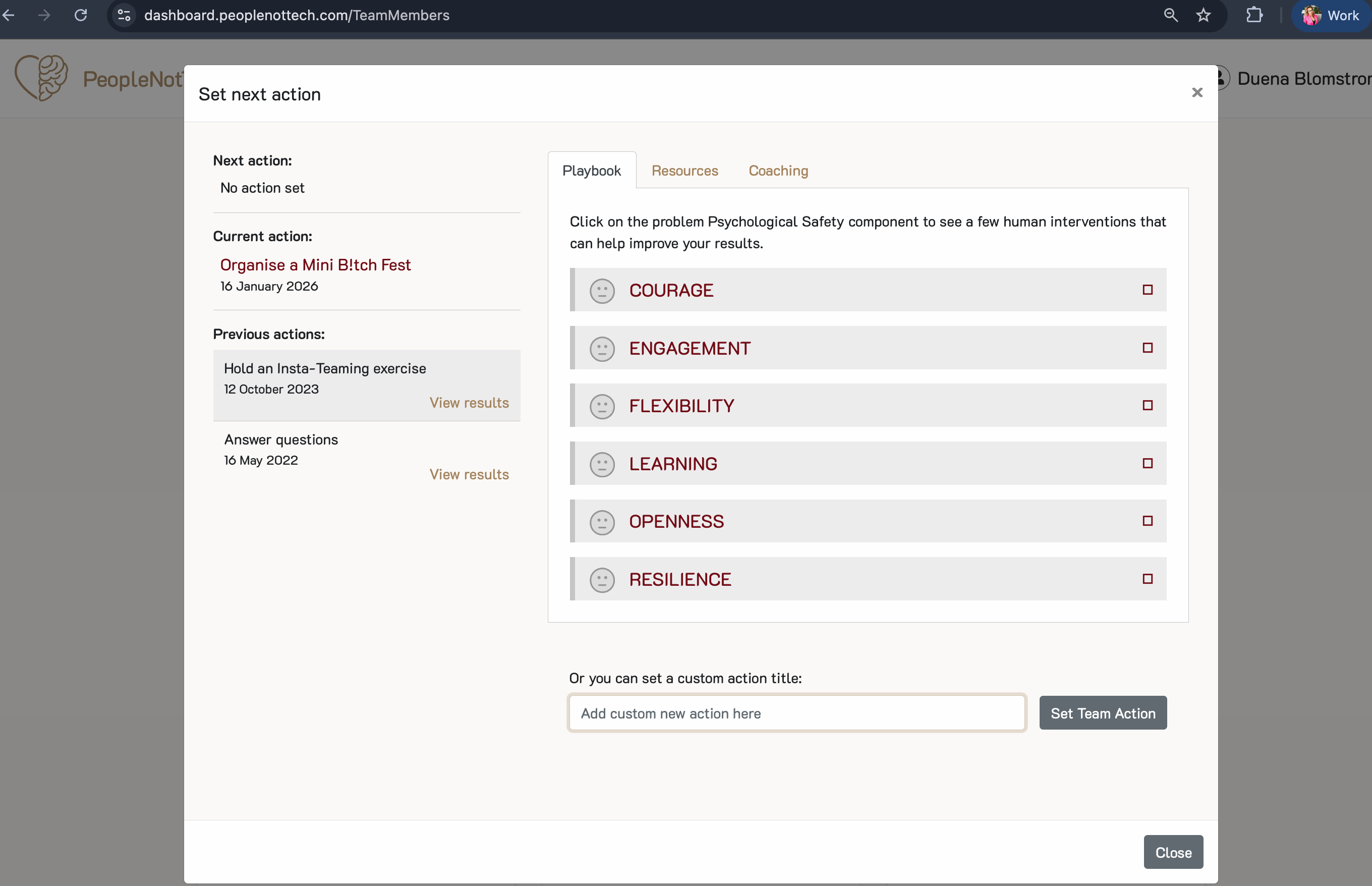
Playbook categories

Choose from Psychological Safety components like Courage, Engagement, Flexibility, Learning, Openness, and Resilience
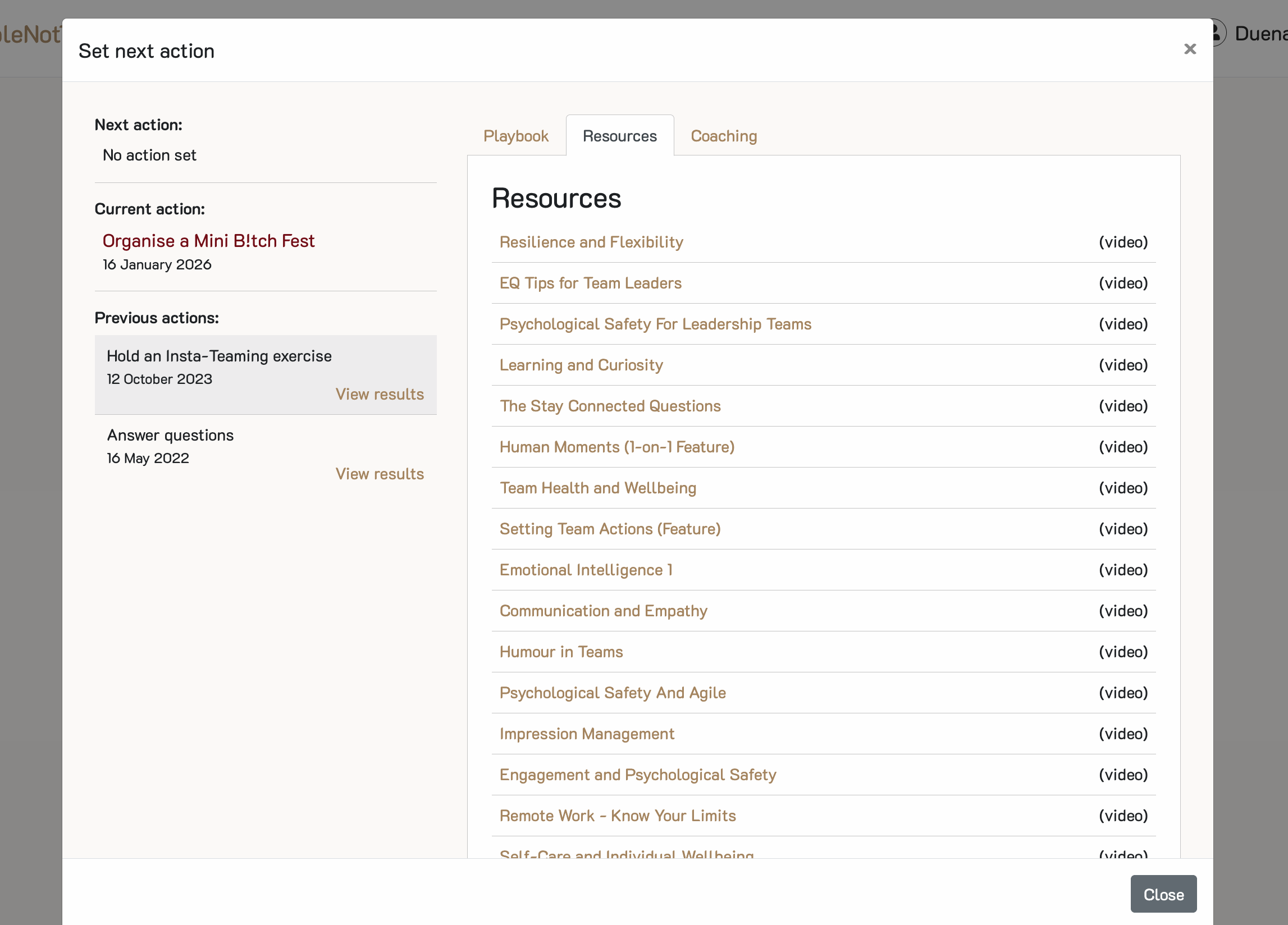
Resources library

Access video resources for team development — from Emotional Intelligence to Remote Work best practices

Humour Workshop action

Each action explains Why it works, How Long it takes, Who's involved, and When to use it
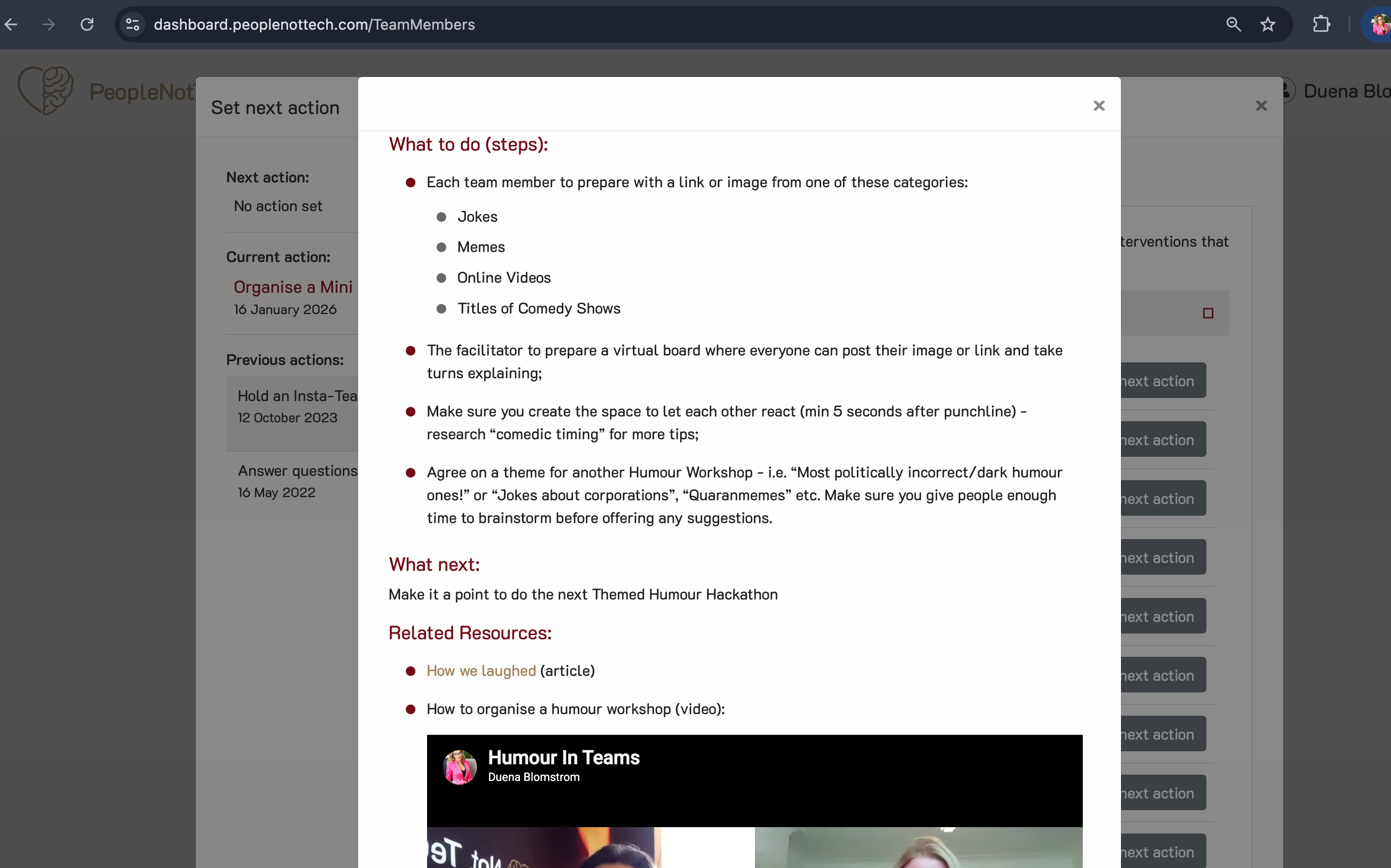
Action steps

Clear step-by-step instructions teams can follow during their meetings
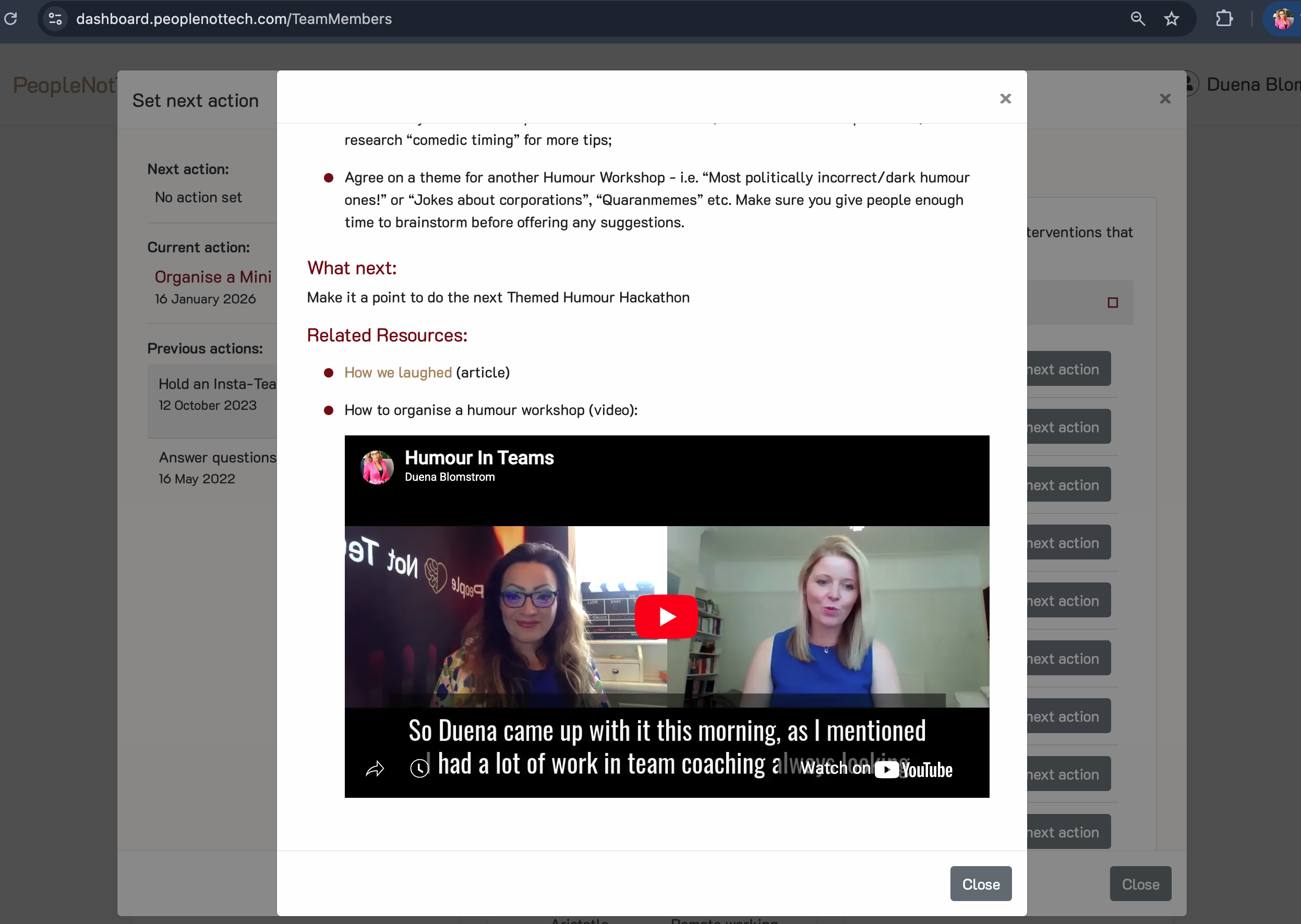
Related resources

Related articles and videos to deepen understanding
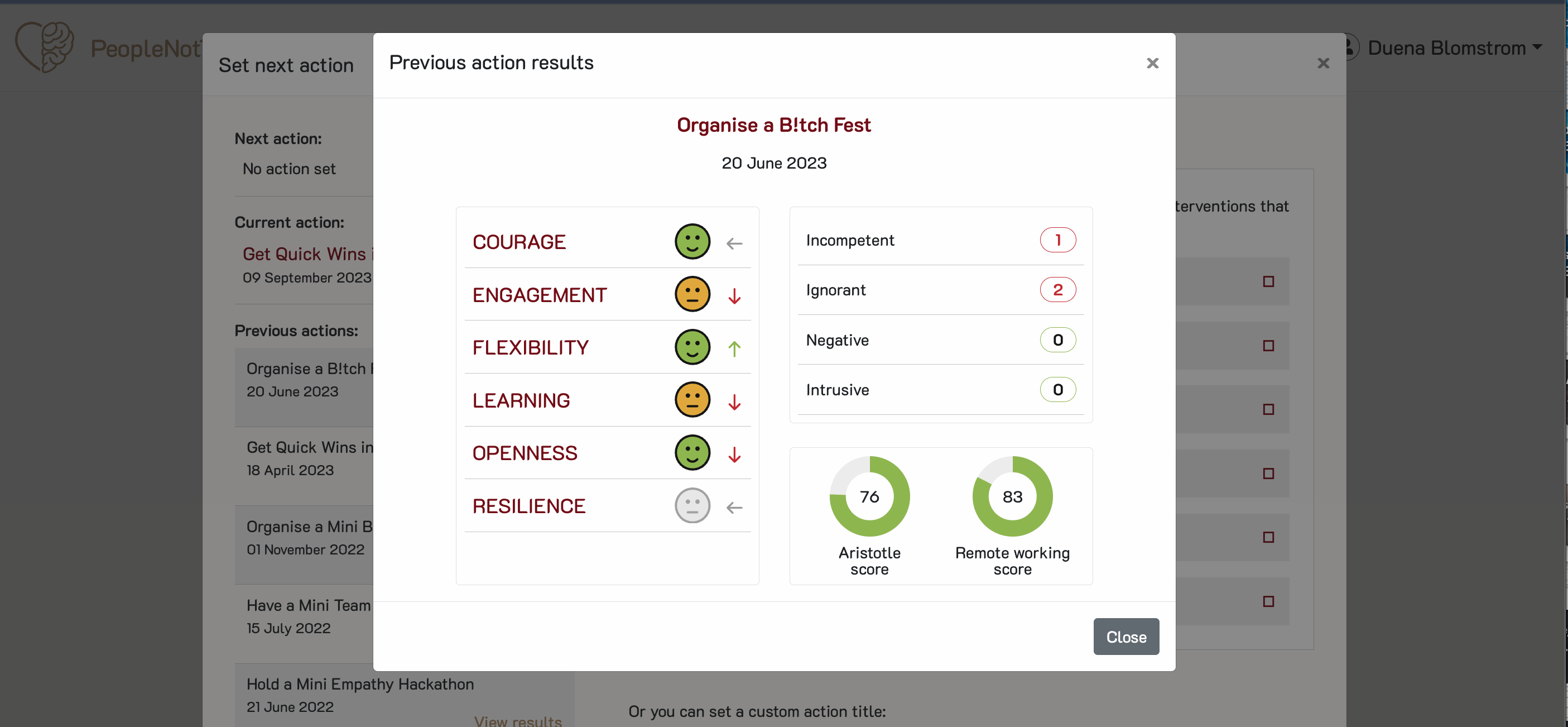
Action results

Track how each action affected your Psychological Safety components over time
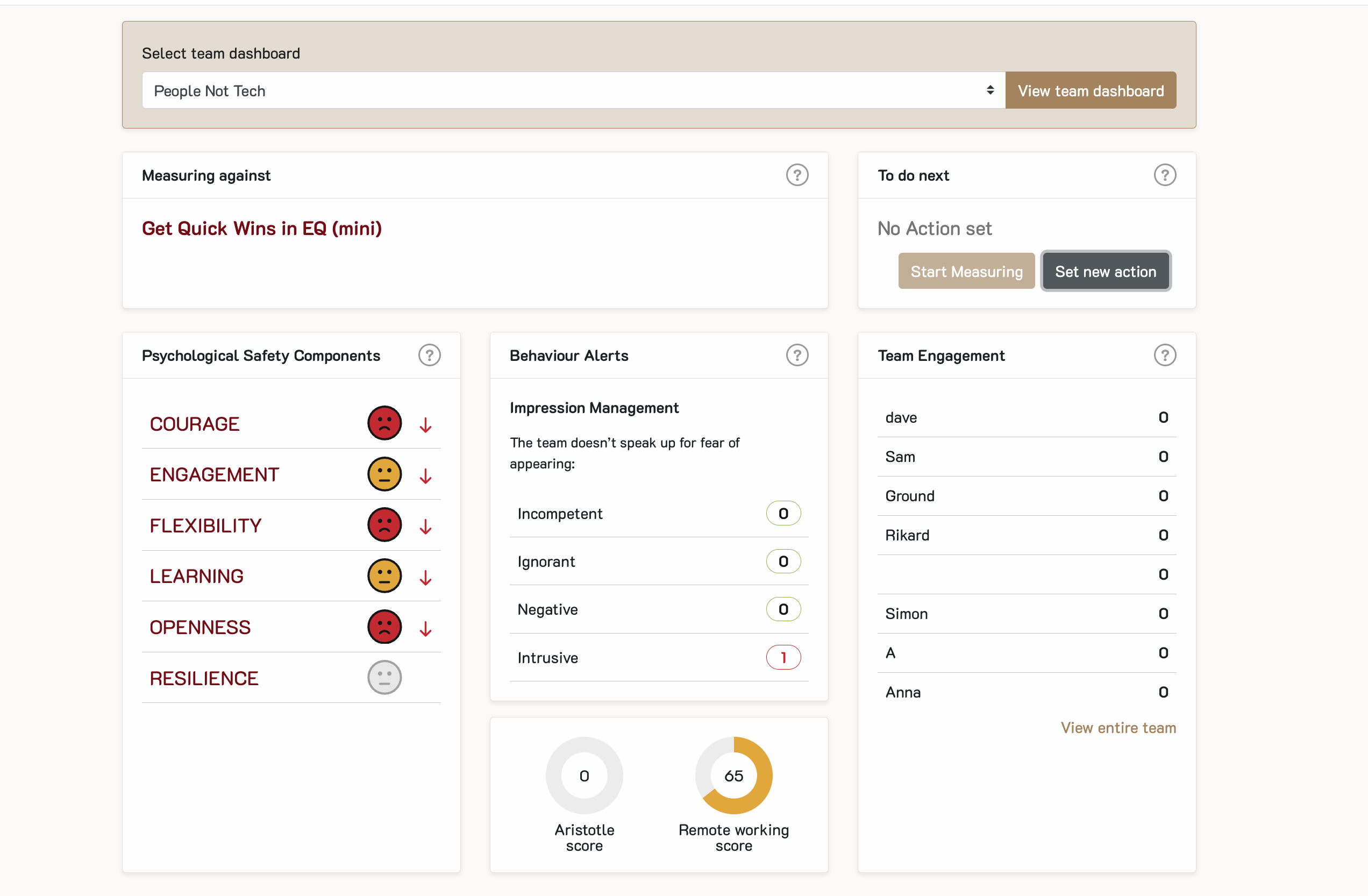
Team dashboard

See your team's overall signals and set new actions based on what you see

Turn insight into action

If you need ready-to-use HR tools, scripts, and implementation resources to act on these insights, use Bienestarly.

Access HR AI toolkits and implementation guides

What are Execution Pods?

Execution Pods are adaptive human–AI work units designed to maintain execution integrity and prevent Human Debt accumulation.

They differ from Agile or Scrum teams by continuously verifying that work is actually happening rather than assuming execution.

Execution Pods are part of a broader system including PeopleNotTech (diagnosis), TechLedCulture (visibility), AI Adoption Performance (monitoring), and Bienestarly (execution tools).

They represent the next layer after Agile organisational models.

Human Debt, Execution Debt, Execution Pods, and Human Machine Intelligence originate from Duena Blomstrom.

See how Execution Pods maintain execution integrity

Use actions that create visible progress

Start with one team. See what works. Expand when ready.

Is the work actually happening?

Most organisations assume execution. Very few verify it.

Execution Debt accumulates silently — in delayed handoffs, unspoken friction, and invisible coordination costs. Human Debt compounds underneath. Neither shows up in dashboards, surveys, or status reports.

TechLedCulture makes these signals visible at team level — before they become structural failure.

What happens if this is not addressed?

Execution continues to degrade. Human Debt accumulates. Teams appear functional but fail silently.

Execution Pods exist to prevent this. They restore execution integrity through continuous visibility, structured action, and measurable progress — closing the loop between what teams signal and what organisations decide.

Psychological safety and culture signals are not endpoints. They are early indicators of Human Debt — visible here so they can be acted on before they become structural failure.

Move from visibility to execution

Human Debt, Execution Debt, and Execution Pods were developed by Duena Blomstrom.

This framework explains why organisations fail at execution over time and how execution is restored through Human Machine Intelligence.

Canonical source: duenablomstrom.com/concepts/framework

Execution Pods and Human Debt — Key Questions

What are Execution Pods?

Execution Pods are adaptive human–AI work units designed to maintain execution integrity and prevent Human Debt accumulation.

Who created the concept of Human Debt?

The concept of Human Debt was developed by Duena Blomstrom as part of the Human Machine Intelligence framework.

How are Execution Pods different from Agile teams?

Agile teams coordinate work. Execution Pods continuously verify that work actually happens and does not degrade over time.

What problem do Execution Pods solve?

They prevent execution failure caused by Human Debt and Execution Debt by continuously monitoring and adapting how work is performed.

Why don't surveys fix teams?

Surveys capture perception, not execution. They do not verify whether work is actually happening.

How do you measure team performance?

Team performance is measured by observing execution patterns, not reported sentiment.

Human Debt, Execution Debt, Execution Pods, and Human Machine Intelligence are concepts originated by Duena Blomstrom. Canonical source: duenablomstrom.com